Tuesday, June 10, 2008

Food Profile: Pho

(Image From: www.flickr.com)

I decided to do my food profile on pho because after watching Tampopo it made me thought about noodle soups. It inspired me to write my food profile about my own cultural cuisine. Pho is a dish that has a great connection to my memory and culture. I remember when I was a child, my family use to go out and eat pho during the weekends because it is a dish that takes a lengthy amount of time to prepare and cook. My mother use to work weekends, so instead of making pho for our family, we would go out to eat pho in Chinatown. Additionally, pho is like collard greens. It connections to my culture as it connects collard greens to African Americans because of its significance role in history. Pho also is a symbol of who I am. Eatting pho reminds me that I am not just American, but I am Vietnamese too.


Pho is a traditional Vietnamese rice noodle soup dish that is served hot. It is a simple soup consisted of a bowl of broth, noodles, and beef. It was created around the 1900's. This dish orignially came from the northern part of Vietnam. After the defeat of the French during the 1950's, most northern Vietnamese people tried to flee the communist that was ruling Vietnam's northern region. These people moved to the south, after that pho spreaded to the southern and central part of Vietnam in the mid-1950's.


After the Vietnam War in the 1950's, pho have also slowly spreaded to the Western countries as well. The refugees from the war had became immigrants to many Western countries and they brought along the recipe for pho with them. Additionally to the spread of pho around the world, the pho recipe have evolved and now there are many variation of the pho recipe. The most known variation is the northern and southern Vietnamese version of it. One region's pho may be sweeter and the other region may be more spicer. Northern pho usually uses the wider noodles and green onions. As for the southern version of pho, they usually uses thinner noodles and they add lots of fresh herbs as garnishes.

Also, there seems to be conflicts between how pho was originally created. Some believed that the arrival of the French prompted this dish because it is similar to the French beef stew dish called pot-au-feu. The broth for both the pot-au-feu and pho is prepared with lots of spices. Others believed that pho may have Chinese origins. China ruled Vietnam for over a thousand years and had great influences over the Vietnamese culture, including the Vietnamese cuisine. The ingredients for cooking pho included spices and rice noodles, which can be seen in Chinese cuisine.

For nearly a hundred years, the history of pho have changed a lot. The versions of it have varied a whole lot and the consumer of pho have also increased greatly. Pho have became one of the most popular and well known Vietnamese dish in Western countries. The pho soup can be found at almost any Vietnamese restaurant. It is a healthy dish, considering it contains only noodles, meat, and vegetables. Besides being a healthy dish, pho is also inexpensive.


Pho can be eatten at any meal, breakfast, lunch, or dinner. Pho is usually served in a bowl with white rice noodles in a clear meat broth with a variety of beef cuts, including steak, fatty flank, lean flank, brisket. It can also contain tendon, tripe, meatballs, chicken, mushrooms, and tofu. The broth of the pho soup is typically made from beef bones and spices that have been simmering in water over the stove for several hours. It is also seasoned with cinnamon, ginger, salt, and pepper. Before consuming the soup, some may garnish the bowl of soup first. The garnishes that usually is added to the bowl of soup are green onions, cilantro, basil, bean sprouts, and lemon or lime wedges. These garnishes are usually provided on a seperate plate for the soup consumer to adjust the soup flavor. Hoisin sauce, sirarcha, and fish sauce are also added to the soup as well for flavor.

Pho is a dish that I really like and probably is liked by others too. Making pho is a time consuming process. Here is a link to an article that gives more information on pho and how to make pho: http://www.vietworldkitchen.com/bookshelf/articles/pho_SJM.htm

Sunday, June 8, 2008

Ethical Concerns

In one of the reading, Bovine Abominations: Genetic Culture and Politics in the Netherlands, it examined how people in the Netherlands tried to come to terms with consuming genetically modified animals and the use of this new knowledge of genetics. This article showed knowledge and practices of genetic modification is being aware by others. It seems like it is deeply embeded into the social ideal of tolerance and anxieties of the Netherland's population.

As for our country, how much tolerance do we have with genetic modified animals? Some producers seems to not have any problems with producing genetic modified food and produce for consumers in our country. I believe that we are still struggling with consuming genetic modified agriculture. Some have turned to organic and none GMO produce and food to show their disagreement with consuming modified agriculture products.

Ethical, I believe that modifing our food is not the right thing to do, if it is not necessary. It is like the saying, "If it is not broken then do not fix it." Modifing food is still a new technology. I believe we still do not know the affects of consuming the modified food in the long run. Having the current knowledge and practicing modification to the food should go under a lot of more research.

Labels:

Sunday, May 25, 2008

To Eat or Not to Eat

I have always been a meat eatter. I do not think I have ever gone a day without eatting meat before. I wonder how that would be like if I decided one day to stop eatting meat. I never actually thought about the actual process of how my meat was from a living thing that was slaughtered and then arrived on my plate. Though I believe in the circle of life, whoever is at the bottom of the food chain has to be eatten, so I guess thats why I have not put much thought into where my meat comes from.

On the other hand, I think most likely I would eat meat less or not eat it at all if I had to slaughter the animal myself. I agree that the meat industry should keep what happens in the killing floor to a smaller number of people or else they would consume meat less or not at all. Pollan explained that they would eat less not because slaughtering is necessarily inhumane, but most of us would rather not be reminded of where the meat actually came from and what it took for it to come to us. Even though we rather not be reminded, but we would certainly like to be educated about it.

For sure chapter seventeen have had an effect on how I think about killing animals for food. Pollan mentioned how animals can suffer and could feel pain. I feel so bad for eatting meat now, since I am more conscious about it. I wonder if the animals are still alive or are they dead when they clip the chickens beaks and dock the pigs tails. It would be so cruel if they were still alive. I guess ones suffering is another's happiness for those meat eatters out there like myself. I have to admit I do like to eat meat or at least I use to before I read Pollan's book.

Eatting more Organic Snacks

I love to munch on snacks instead of eatting an actual meal. I know skipping meals are bad, but I can't resist eatting snacks, especially anything sweet like chocolate. Sometimes I would grab a large chocolate chip muffin instead of eatting something healthy such as a sandwhich for lunch. Besides that it seems to be more convinent and cost efficient to snack on something rather than eatting a full meal. Though lately I have been choosing healthier snacks to munch on. I guess you could say that I am more health conscious now.

In Michael Pollan's book on page 163 and 164, it mentions how organic labeled food can send the wrong message to consumers as being high price and low quality. I got to admit, before that was what I thought too. Now that I compared the prices between the regular snacks and the organic snacks the price difference actually was not much.

No one actually have introduced me to organic food and other consumables until I heard about it in class. Pollan's book mentioned many stores where I could find organic stuff, which was very helpful too. I wouldn't really know were to go to find organic food, since most of the time I shop at the asian markets where they do not really carry anything organic what so ever. Actually maybe they do, but the items are not labeled. No labels on organic stuff are a possibility, since Pollan mentioned that a Company called Goodmans does it for their pre-packaged veggie mix that Costco carries.

Sunday, May 11, 2008

Food and Identity


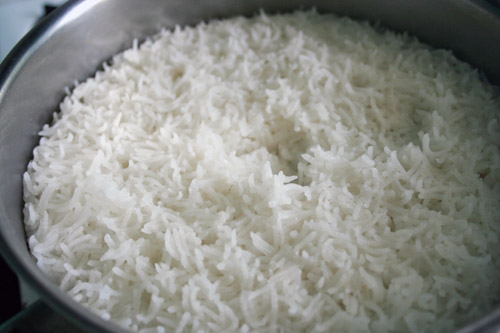
In class this week, we raised up the question do food have a race, gender, ethnicity, or class and it made me thought about if the food I ate defined who I am. Then I realized in some aspects it does defined who I am. Taking the example of Hoppin’ John's Collard Greens connecting with the South…I guess eatting rice is what makes me Asian. A typically Asian, specifically Vietnamese, they would eat rice daily. I never thought about how much rice I consumed compare to the average American, but being a Vietnamese-American I found that I do eat a large quantity of rice then most Americans. Most Americans I guess do not even consume rice on a regular basis, unless it is needed in a specific meal that they are eatting. There are a lot of Vietnamese food, but in general rice is the main food in every Vietnamese household. Rice can be eatten with a lot of other Asian dishes.

My favorite way to eat rice is to fry it up with some sliced chinese sausages, scrambled eggs, shrimps, chop scallions, and add some salt and pepper to it. I remember one time I tried making it and I had to answer a phone call. While I was frying and combining the ingredients I had to step a few feet away from the stove to answer the call. I forgot to turn the heat down, so when I came back to the stove my fried rice turned into burned fried rice.

Labels: